

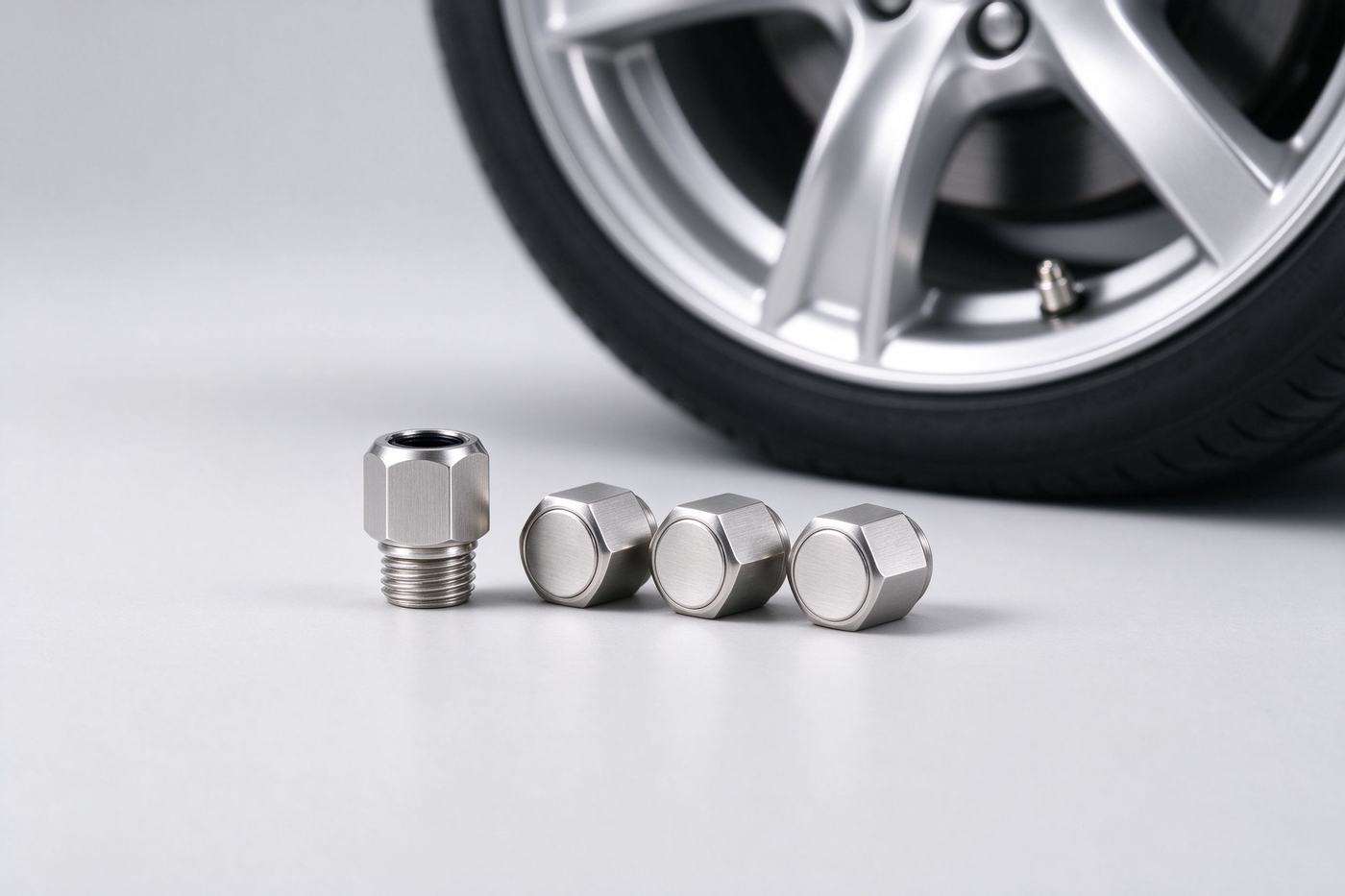
Four machined stainless steel caps with a rubber gasket inside each one — the last thing standing between the weather and your valve core.
The one seal on your wheel that lives in the weather.
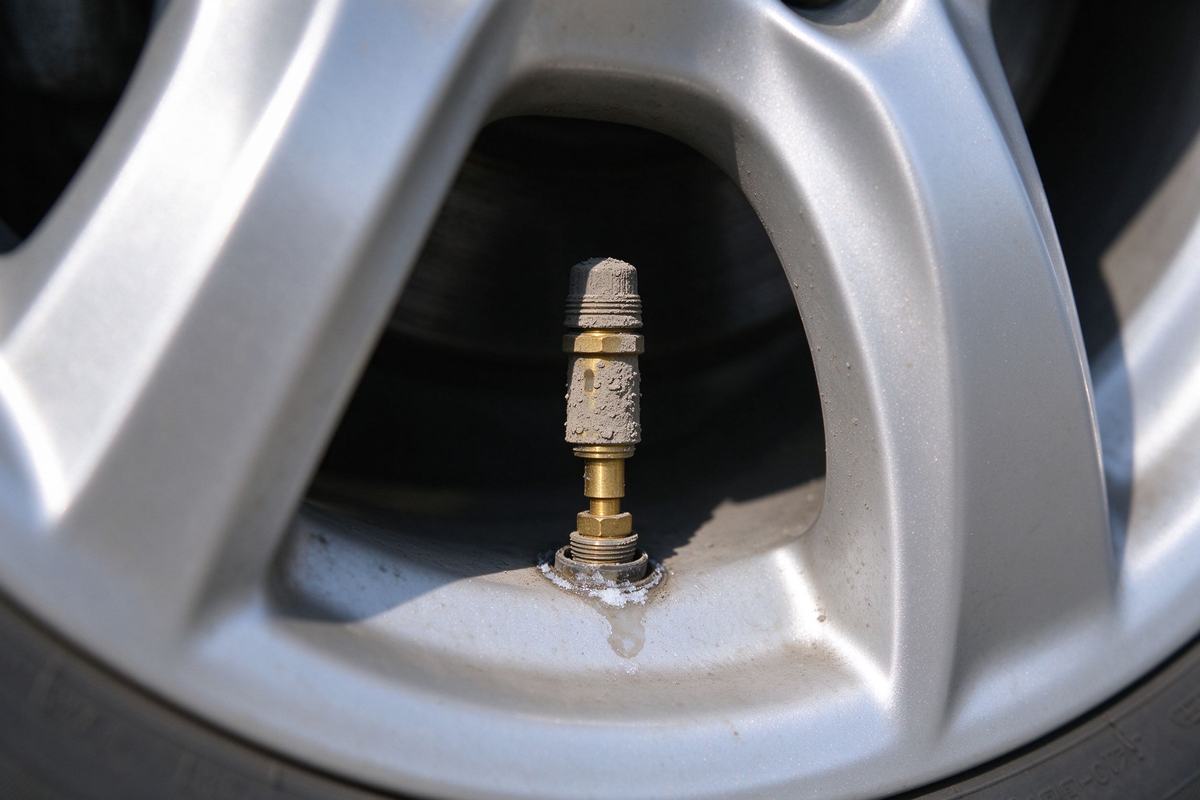
Every tyre holds its pressure behind a small spring-loaded valve core, and the cap is the only thing protecting it. Leave the cap off, or keep a split plastic one on, and grit, water and road salt collect around the core. That is where slow leaks come from: a core that no longer seats properly loses a couple of psi a week, with no puncture to find, and in a state that salts its roads in winter, it is also where corrosion starts.
- ✓Grit holds a core open. Fine dust works into the seat and the valve never quite closes again — a few psi a week, no visible damage.
- ✓Water and salt do the rest. Moisture sitting on a brass core is what starts pitting, and road salt speeds it up.
- ✓Plastic caps go quietly. They crack along the moulding line long before they fall off, so a cap can look fine and seal nothing.
- ✓A slow leak is expensive to hunt. You pay for a diagnosis that finds nothing, or you top the tyre up every week and live with it.
A gasket that seals, and a hex head that lets you stop.
Two details do all the work. The first is the rubber gasket sitting inside the cap: it presses against the top face of the stem, so the seal does not depend on the threads alone — which is exactly what you want after the cap has been off and on a hundred times at tyre shops. The second is the hex head. It lets you tighten the cap by feel, or with a small spanner when your fingers are cold and wet at a roadside, and it lets you stop at the point where the gasket just makes contact instead of crushing it.
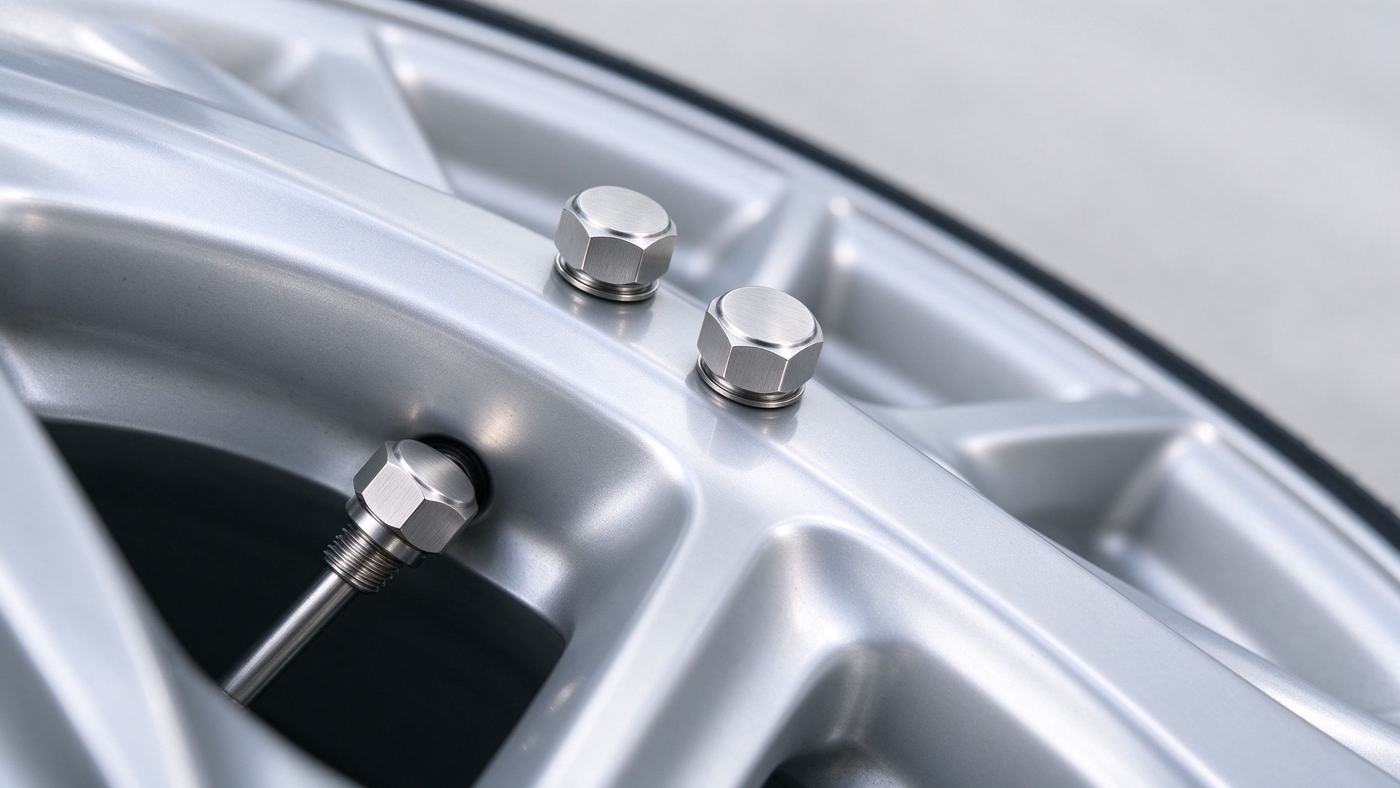
Fitted and seated: the gasket presses on the stem face, and the hex head sits proud enough to grip by hand.
Machined steel, down to the gasket.
There is not much to a valve cap, which is exactly why the details decide whether it works. This one has a machined stainless body with accurate hex flats, a thread cut deep enough that the cap seats fully instead of stopping halfway, and a rubber gasket sitting in a groove below the threads where it cannot fall out or be knocked loose during a tyre change.
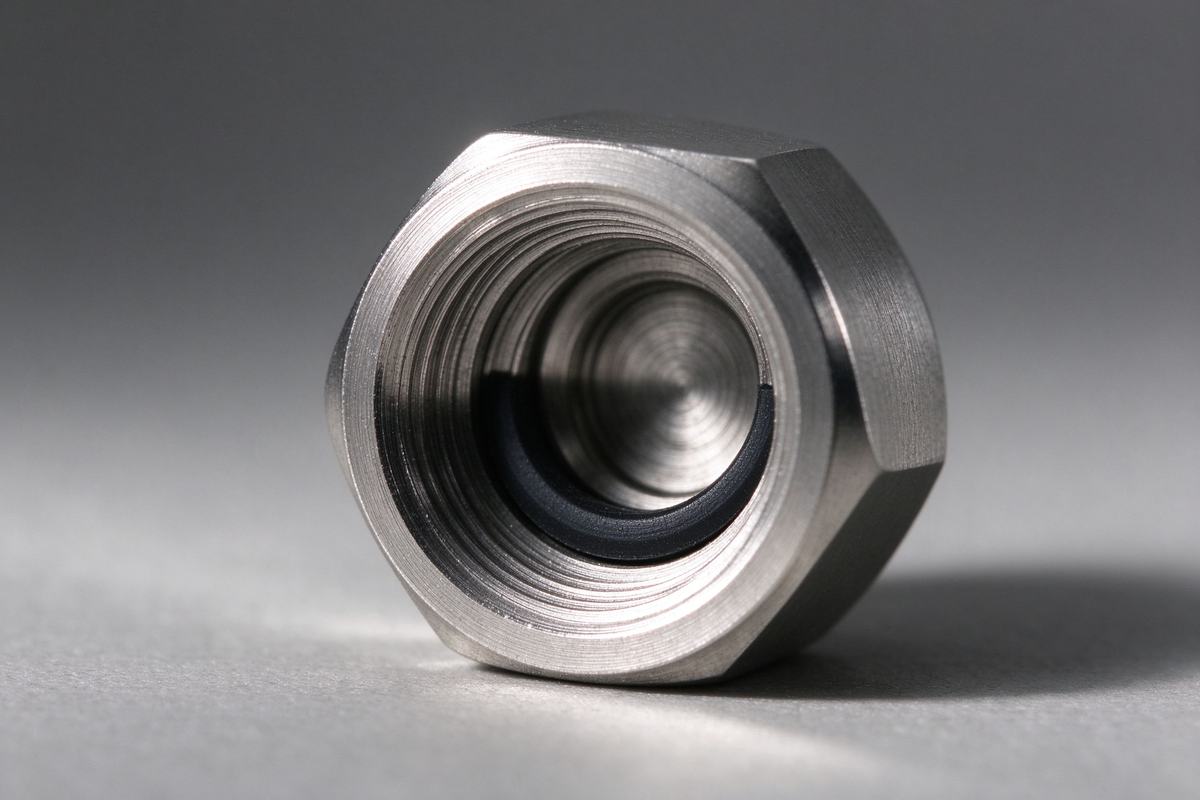
Inside the cap: a cleanly cut thread and the black rubber gasket that does the actual sealing.
- ✓304 stainless steel body. Resists corrosion from road salt and brake dust, and does not go brittle in sunlight the way plastic does.
- ✓Internal rubber gasket. The real seal. It sits in a groove under the thread, so it stays in place when the cap is off.
- ✓Accurate hex flats. Machined rather than cast, so a 10 mm spanner grips properly instead of rounding the corners.
- ✓0.305″-32 (8V1) thread. The standard Schrader thread, cut to full depth so the cap bottoms out against the gasket, not the thread.
Three minutes, all four wheels.
No tools and no jack — you do not even need to take a wheel off. The only step people skip is the one that matters most in winter.
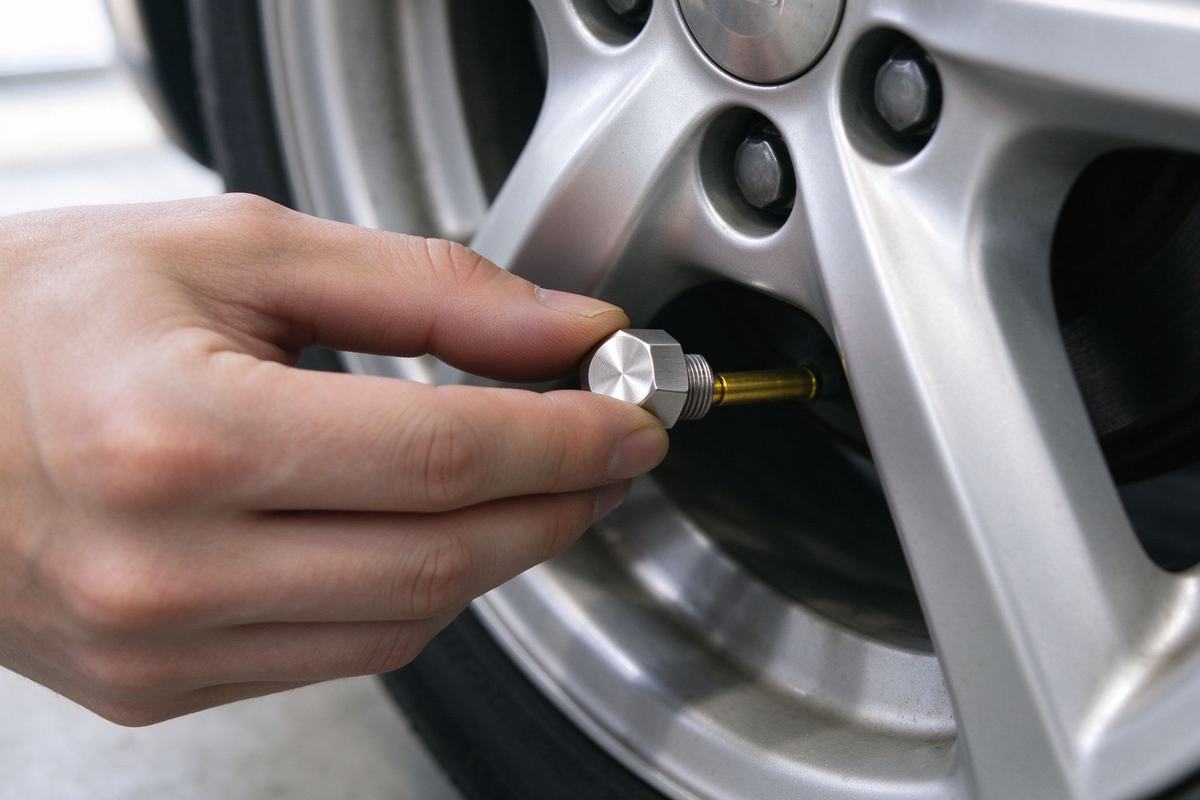
Thread it on by hand until the gasket seats — that is the whole job.
Will it fit your wheels?
These are standard-thread caps, so the answer is almost always yes. The one thing worth checking is what your valve stems are made of, because that decides whether a metal cap needs a little care.
| What to check | This cap | Result |
|---|---|---|
| Thread | 0.305″-32 TPI (8V1), standard Schrader | Fits standard car, SUV, truck, trailer, motorcycle and bicycle valves |
| Valve type | Standard bore Schrader | Not for Presta (French) valves |
| Head size | Approx. 10 mm across the flats | Hand-tight, or a 10 mm spanner if needed |
| Dimensions and weight | Approx. 16 mm tall, approx. 3 g each | Adds almost nothing to the stem |
| TPMS and metal stems | 304 stainless with a rubber gasket | Suitable — grease the threads and check them periodically |
| Quantity | 4 caps | One per wheel, none left over |
This cap, the plastic ones, or cheap aluminium.
Every one of these will screw onto your valve. The difference is what happens after two winters of salt, sun and tyre shop visits — and how each one fails when it does.
| Stainless steel 4-pack (these) | Plastic caps | Cheap aluminium caps | |
|---|---|---|---|
| How it seals | Rubber gasket pressed on the stem face | A thin moulded lip, which is enough until it is not | Thin O-ring, or nothing at all |
| Material | 304 stainless steel | Moulded plastic | Anodised aluminium |
| Winter salt and UV | Finish holds up; no brittleness | Goes brittle and cracks along the moulding line | Coating wears through, then the metal pits |
| Seizing risk | Low, with a dab of silicone grease on the threads | None — plastic does not corrode onto metal | Highest — aluminium against aluminium corrodes quickly, and the metal deforms if over-tightened |
| Tightening | Hex head; you can feel exactly when the gasket seats | Finger-tight only; threads strip easily | Soft threads; easy to cross-thread |
| Appearance | Satin brushed steel that matches alloy wheels | Purely functional | Coloured, and usually faded after a season |
| Who it suits | Everyday drivers, especially where roads are salted | A free emergency spare | Show cars and warm climates |
Every number, in one place.
Fitment comes down to one thread size. Everything else is material and finish.
| Specification | Value |
|---|---|
| Material | 304 stainless steel |
| Seal | Internal rubber gasket |
| Thread | 0.305″-32 TPI (8V1), standard Schrader |
| Shape | Hexagonal |
| Across flats | Approx. 10 mm (0.39 in) |
| Overall height | Approx. 16 mm (0.63 in) |
| Weight | Approx. 3 g each (0.11 oz) |
| Finish | Satin brushed |
| Valve compatibility | Standard bore Schrader valves |
| Not compatible with | Presta (French) valves |
| TPMS | Suitable; grease the threads and check periodically on aluminium stems |
| Quantity | 4 caps |
| Typical use | Cars, SUVs, trucks, trailers, motorcycles and bicycles |
with rubber gaskets fitted
Silicone grease is not included.
Look after them and they outlast the tyres.
A valve cap is a sealed fastener living outside in all weathers, so treat it like one. Four small habits keep them working and keep them removable.
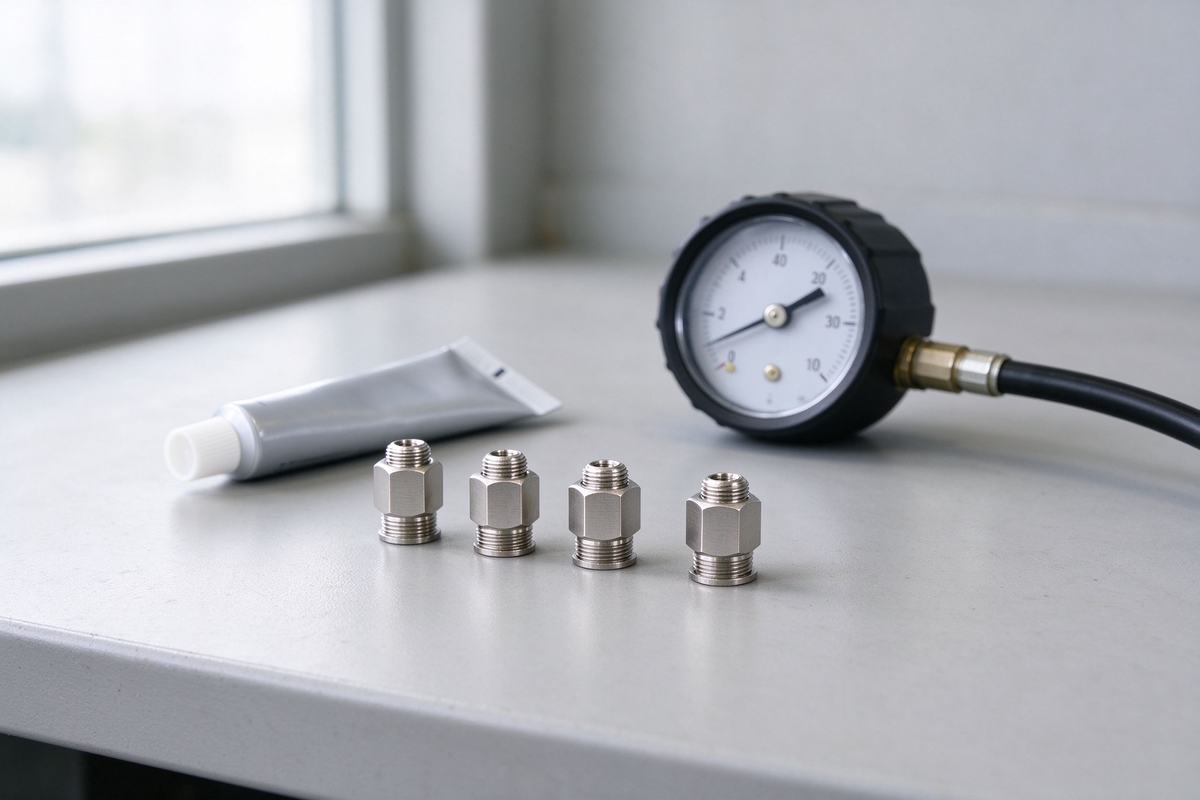
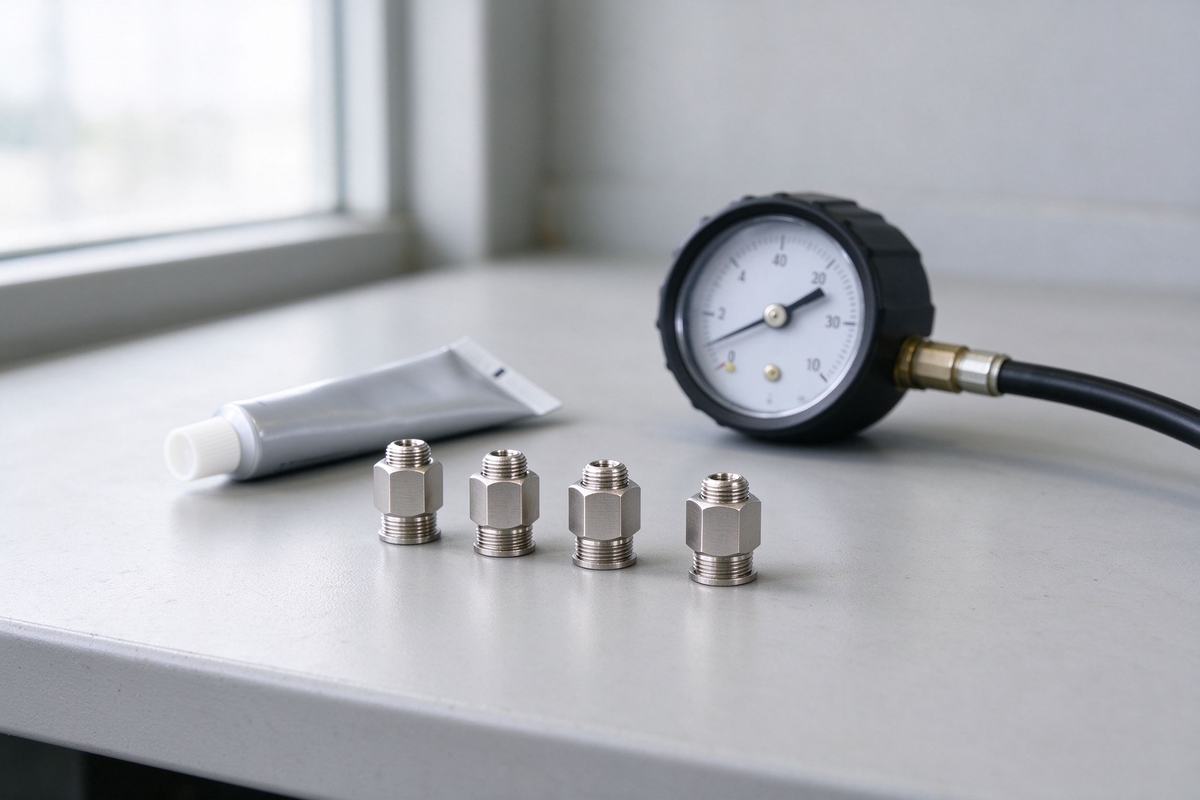
Everything the job needs: the caps, a little silicone grease, and a pressure gauge to check with.

Reviews
There are no reviews yet.